This season’s fashion trends are structured around a few strong axes: bold color palettes, reimagined cuts, and a new regulatory constraint that changes the way brands produce and communicate. Understanding these axes allows for sustainable clothing choices rather than chasing every micro-trend.
Law 2026-602 and responsible fashion: what changes for style this season
Since September 1, 2026, law n° 2026-602, integrated into the Environmental Code, imposes environmental surcharges per textile item on brands operating under the ultra-fast fashion model. Penalties vary by product category: a few dozen cents for socks, several euros for jeans or jackets. The progression is scheduled until 2030.
The other aspect, applicable from January 1, 2027, prohibits advertising and paid collaborations with influencers for the affected brands. In practice, messages will need to focus on repair, reuse, and sobriety rather than compulsive buying of new items.
For everyday style, this law encourages prioritizing pieces designed to last several seasons. A well-cut blazer or a pair of durable fabric trousers holds more value than a garment bought for a single occasion. Natural materials and careful finishes become more relevant criteria for choice than price alone, as on lefumoirdelamode.com the selections already incorporate this logic of long-lasting pieces.
Autumn-winter 2026 color palette: burgundy, chocolate, and saturated tones
The dominant palette this season is based on deep shades. Burgundy stands out as the key color, appearing on both coats and accessories. Chocolate, ecru, and khaki complete the spectrum by replacing classic neutrals (black, gray, navy).
Saturated tones (bright rainbow, butter yellow, electric blue) appear as counterpoints on isolated pieces. The idea is to use them as accents rather than as the base of an outfit.
Combining these colors without tonal mistakes
Burgundy works in contrast with ecru or cream, and in a tonal blend with chocolate. Mixing two saturated shades in the same outfit often results in a theatrical costume effect, which can be difficult to wear daily. One strong colored piece per look is enough to structure the silhouette.
- Burgundy + ecru: a sharp contrast suitable for both office wear and outings
- Chocolate + khaki: an earthy combination that works with textured materials (velvet, boiled wool)
- Butter yellow as an accessory (bag, scarf) on a neutral base: a touch of color without overload
Trendy cuts and silhouettes: from structured blazers to fluid trousers
The autumn-winter 2026-2027 Fashion Weeks confirmed two opposing directions in terms of volume. On one side, structured and fitted pieces (tailored blazers, body-hugging midi skirts). On the other, loose volumes (oversized coats, wide trousers, “fluffy” effects).
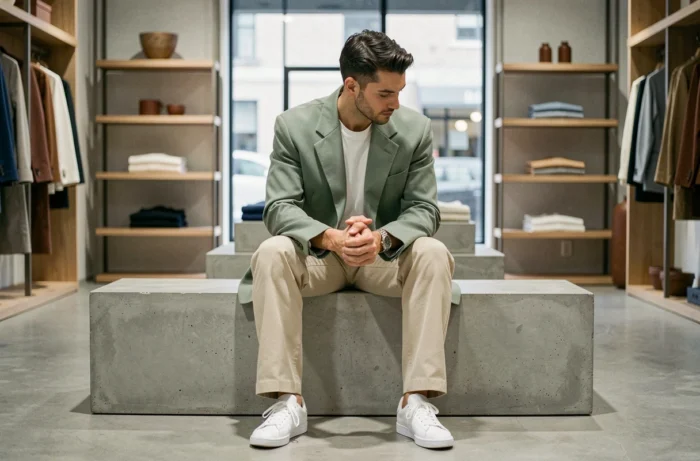
The blazer remains the most versatile piece in the wardrobe. Worn over straight jeans or fluid trousers, it instantly dresses up an outfit without any particular effort. Crossed or slightly padded versions dominate this season.
Adapting the cut to your body shape
Choosing between a fitted cut and a loose cut depends less on the trend than on the silhouette. The principle is mechanical: a loose top calls for a more structured bottom, and vice versa. Wearing volume everywhere flattens the silhouette, while wearing tight everywhere stiffens it.
- A silhouette in A (hips wider than shoulders): a slightly structured top and straight or flared bottom balance proportions
- A silhouette in V (broad shoulders): fluid trousers or a midi skirt with volume compensates for the build
- A silhouette in H (little waist definition): a belt or a fitted blazer creates a visual reference point
Materials and textures to prioritize this season
The runways showcased materials that play on touch as much as on visuals. Velvet, thick knits, and leather (or its plant-based alternatives) are found on key pieces.
Dense knits and thick textures dominate the autumn wardrobe. The oversized chunky knit sweater, already present in spring-summer 2026, continues into autumn collections with darker colors. Corduroy returns on trousers and short jackets.
Fine synthetic materials, typical of fast fashion, are losing ground against regulations and a growing demand for sustainability. Checking the composition on the label before purchase is no longer a niche reflex: it’s a habit that saves time and money in the long run.
Building a coherent look: layering method
Rather than accumulating trendy pieces, building an outfit through layering allows for adaptation to temperature variations while maintaining a clear line. The method relies on three levels.
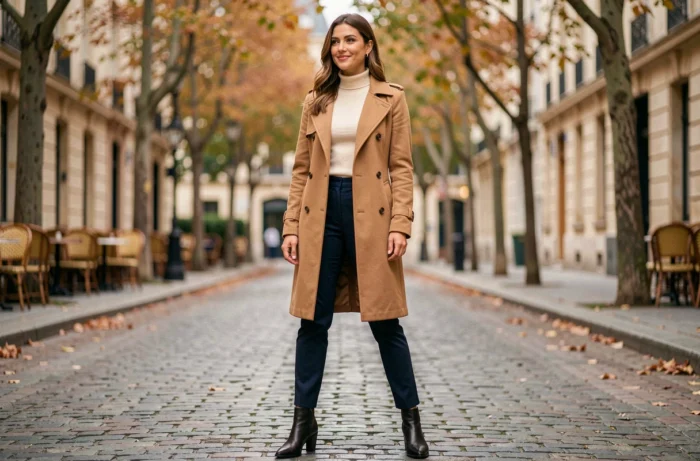
The base (t-shirt, shirt, or blouse) sets the color tone. The middle layer (sweater, cardigan, blazer) adds volume and structure. The outer layer (coat, parka, trench) finalizes the silhouette and provides protection.
This system works because it imposes a limited choice at each level. A maximum of three colors and two different textures in the same outfit produces a readable result. Beyond that, the whole loses coherence.
This season’s trends (burgundy, structured blazers, textured materials) naturally combine within this layering logic. A chocolate blazer over an ecru blouse, with straight trousers and a burgundy bag, is enough to create a look aligned with current codes, without relying on a single brand or purchasing channel.