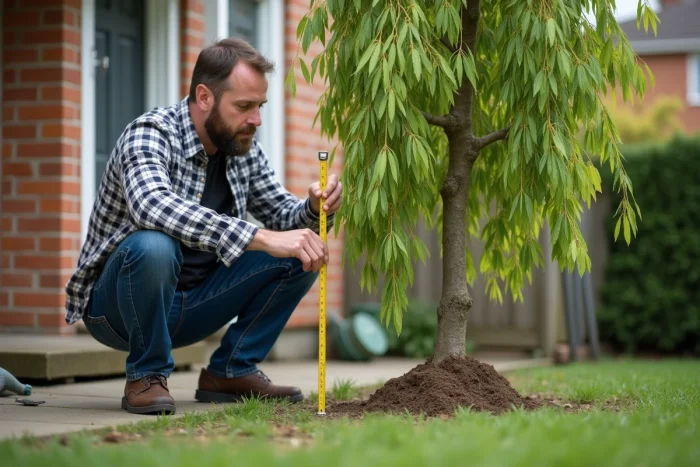
The minimum distance required by law to plant a shrub near a house may seem trivial: 50 centimeters, sometimes two meters, depending on the municipality. However, this rule, which varies according to municipal regulations, raises doubts for many gardeners when choosing the ideal location.
The roots of the Salix integra ‘Hakuro Nishiki’ pose no threat to foundations, provided it is not placed against a wall that is already weakened. Yet, every garden is a unique case: orientation, soil quality, maintenance constraints, and regulatory requirements intertwine and necessitate adapting decisions to the reality of the site.
What to know before installing a shrimp willow near your house
The shrimp willow, or Salix integra ‘Hakuro-Nishiki’, is appealing due to its changing foliage: soft pink in spring, cream then bright green during summer, and golden yellow in autumn. Native to Japan, this versatile shrub can be used as a standalone, in a mass planting, or even in a large pot on a terrace. At maturity, it typically reaches 1.5 to 3 meters in height, with a spread of 1.5 to 2.2 meters. Its rapid growth and hardiness down to -20 °C reassure novice gardeners.
The recommended distance between a shrimp willow and a house should not be taken lightly. One must anticipate the adult size of the plant, the vigor of its roots, the necessary aeration, and the available light. Planting the shrimp willow too close to a wall hinders foliage development, promotes moisture on the facade, and complicates regular pruning. This small tree prefers cool, rich, well-drained soil, with a neutral to acidic pH. It fears prolonged drought and direct sunlight during scorching afternoons.
It can be found in bushy form or grafted on a stem. The cultivar ‘Flamingo’ adds a decorative touch with its red branches in winter. The ideal planting period is autumn or early spring, avoiding frost. A stake is useful for stem-grafted specimens, especially in wind-exposed areas. Thanks to its flexibility, it pairs well with grasses, perennials, or compact shrubs. This diversity enhances its graphic style while respecting the proper distance from buildings to ensure the longevity of both the garden and the house.
At what distance should you plant a shrimp willow to preserve your home?
The shrimp willow (Salix integra ‘Hakuro-Nishiki’) catches the eye with its variegated leaves and grows rapidly. But before planting, it is essential to measure the correct distance from the house. Its roots, significantly less invasive than those of a large willow, seek moisture laterally. Too close to a wall, the shrub can promote moisture in the foundations or grow in an unbalanced manner. At maturity, it reaches 1.5 to 3 meters in height and spreads 1.5 to 2.2 meters wide.
To avoid complications, maintain at least 2 meters between the trunk and the facade. This space allows the house to breathe, protects the masonry from water splashes, and limits root competition with buried pipes or drains. Sunlight is also important: the shrimp willow prefers morning light or partial shade, away from walls that reflect heat in the height of summer.
In deep, cool, and well-drained soil, it thrives without disturbing nearby structures. Plant it preferably in autumn or early spring, avoiding frost periods. If your site is wind-exposed, tie young grafted stems to a sturdy stake. In small gardens, growing in a pot allows for space management while respecting the recommended distance.
To clarify the key points to remember when planting, here are the parameters to consider:
- Minimum distance from the wall: 2 meters
- Ideal soil: cool, drained, rich, deep, neutral to acidic pH
- Exposure: gentle light, partial shade, non-burning sun

Maintenance tips and tricks for a healthy shrimp willow through the seasons
This small willow requires regular attention to remain vigorous and decorative. Pruning, done at the end of winter or early spring, shapes the silhouette and encourages the emergence of young colorful shoots. This operation also stimulates the renewal of the variegated foliage that gives it its charm.
Watering should be consistent, especially for recent plantings or those in pots. Monitor the first two years: the soil should remain cool, without excess, to ensure successful establishment. An organic mulch, such as straw, wood chips, or mulch, will retain moisture while protecting the roots from the cold. If the shrimp willow is growing in a pot, a liquid organic fertilizer or a spring compost addition will provide the necessary boost.
If the leaves turn brown, it is often a sign of too much sun, a lack of water, or a fungal attack. Prune affected areas, adjust watering, and treat if necessary with an appropriate product. The main pests to watch for are aphids, scale insects, and leaf beetles. At the first signs, a bit of black soap or a hint of denatured alcohol is usually enough to limit damage.
To accompany the seasonal maintenance of the shrimp willow, keep these key actions in mind:
- Pruning period: late winter to early spring, with possible maintenance pruning in summer
- Recommended mulching: straw, wood chips, mulch to retain moisture and protect roots
- Ideal companions: grasses, spiraea, hostas, ferns, hibiscus
Planting a shrimp willow at the right distance means choosing peace of mind for your garden and home. A few well-executed actions, and the spectacle of its variegated foliage will be offered, season after season, to attentive eyes as well as to those who pass by without stopping.