Which lifestyle categories are gaining ground in 2026, and which are declining? Between French regulations reshaping the textile offer, shopping habits shifting towards second-hand and cosmetics, and the emergence of artificial intelligence in the search for inspiration, the signals this year paint a significantly different landscape from that of 2024. This article compares the ongoing dynamics to identify the segments that are capturing attention.
Anti-fast fashion law and mandatory labeling: what changes for online textile purchases
France is the first European country to legislate directly against ultra-fast fashion. This issue has become regulatory, no longer just a consumer trend. Affected sellers must now display the place of manufacture near the price, as well as information about the environmental and social impacts of the product.
This obligation concretely alters the online shopping experience. On product pages, the place of manufacture becomes as visible as the price. For brands that relied on the opacity of their supply chains, the adjustment is substantial.
Brands that labeled their collections as “eco-friendly” without proof are now exposed to sanctions. To keep up with the latest news on 10 Grammes, this regulatory aspect serves as a useful filter to distinguish real commitments from marketing claims.
Average textile basket declining and shift towards cosmetics: overview of consumer choices
Observations reported by Afitep in the fall of 2026 outline a changing consumption pattern. The average basket in clothing is declining, while small purchases deemed gratifying are on the rise.
| Lifestyle segment | Fall 2026 dynamic | Main factor |
|---|---|---|
| New clothing | Average basket declining | Budget constraint, regulation |
| Second-hand (clothing, accessories) | Increased interest | Price search, environmental awareness |
| Cosmetics | Shift in spending | “Small pleasure” effect, accessibility |
| Modular living (multifunctional furniture) | Emergence | Space constraints, remote work |
The shift in spending towards cosmetics and second-hand reflects a rational choice: consumers are not spending less overall; they are redistributing their purchases towards categories perceived as more gratifying or virtuous.
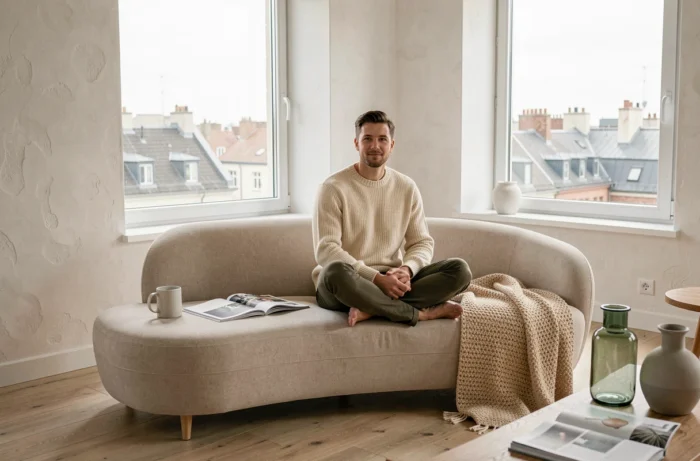
Modular living, still underrepresented in traditional lifestyle media (mainly focused on fashion), is emerging as a distinct segment. Multifunctional furniture addresses concrete constraints of living space and remote work.
Artificial intelligence and personalized recommendations: the end of scrolling on social media
A Mastercard statement shared by Afitep in October 2026 describes a shift in how consumers, particularly teenagers, seek lifestyle inspiration. Conversational assistants are beginning to replace scrolling through content on social media to compare products and obtain suggestions.
This change has direct consequences on how trends are formed. When a conversational algorithm recommends a leather bag or a seasonal piece, it does so based on criteria declared by the user (budget, style, usage). AI recommendation personalizes the selection instead of standardizing it.
In practice, this means that micro-trends fueled by social media are losing their ability to impose a single product on millions of people simultaneously. The diversity of suggestions generated by AI fragments choices.
- Brands that invest in structured product data (materials, place of manufacture, certifications) appear better in AI assistant responses
- Capsule collections and pieces with strong identities become more visible than generic basics, as AI can associate them with specific queries
- Short video content remains an inspiration lever, but its role is evolving towards demonstration rather than prescription
Leather accessories and seasonal pieces: what the fall 2026 selection highlights
Analysis of the most searched keywords this season confirms that leather accessories, particularly bags, remain the priority investment category. Searches frequently associate “leather,” “bag,” “collection,” and “fall,” reflecting an interest in durable pieces rather than disposable clothing.
This positioning aligns with the logic of the previous table: when the textile budget contracts, purchases focus on accessories perceived as lasting. A well-chosen leather bag can last through several seasons, while a micro-trend garment loses its relevance in a few weeks.
More discreet brands, often European and positioned on an artisanal style, attract customers looking to distinguish themselves from pieces seen on all news feeds.
- Pieces made from vegetable-tanned leather are gaining visibility, driven by environmental display constraints
- Fall-winter collections favor tighter palettes, with warm tones and visible textures
- The concept of a “permanent wardrobe” is gaining ground against the rapid rotation of fashion ideas
The trade-off between durable accessories and ephemeral clothing summarizes a significant part of this year’s lifestyle dynamics. Regulation pushes in the same direction as purchasing behaviors: towards less volume, more traceability, and more targeted choices. The segment that most clearly benefits from this convergence remains that of leather accessories and seasonal pieces with a strong perceived longevity.