The price differences between two machines with the same capacity can exceed 500 euros, without necessarily guaranteeing significant differences in terms of durability or energy efficiency. Some innovations, touted as essentials by manufacturers, do not impact water savings or the actual washing performance.
The rise in electricity and water costs is radically changing the selection criteria, relegating aesthetics or connectivity to the background. The most popular models do not necessarily correspond to the devices best suited to daily needs or offering the best value for money.
The different types of washing machines and their advantages in 2024
The market for washing machines is diverse: it is impossible today to reduce the choice to a simple capacity figure or spin speed. Now, everything hinges on design, practicality, and long-term savings. One no longer chooses a washing machine solely for its shape, but for how it will concretely fit into daily life.
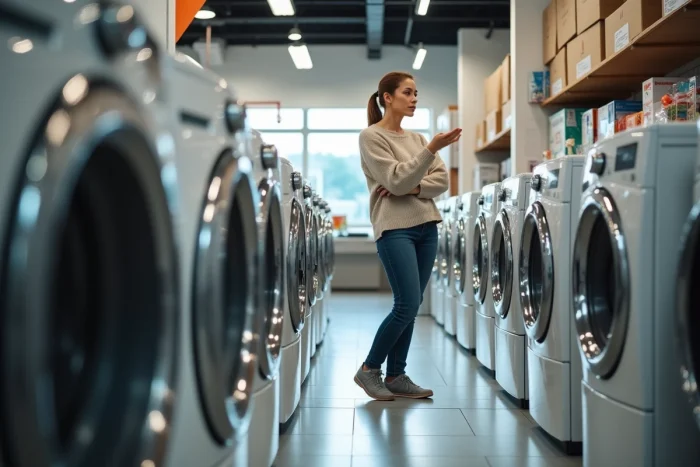
In 2024, three main categories share the stage: front-loading washing machines, top-loading, and washer-dryer combos. Front-loading machines, with their front door, are ideal for easily loading duvets or large sheets. In terms of capacity, they cover most needs, from 7 to 12 kg, which is suitable for both a couple and an entire family.
Top-loading models find their audience in small apartments. Compact machines designed for those who count every square centimeter, but who are willing to sacrifice a bit of capacity.
Finally, washer-dryer machines play the space-saving card. They wash and dry in the same drum, a practical solution when installing two appliances is impossible. In return, they consume more energy and, even in recent ranges, drying remains slower than with a standalone dryer.
In the face of this abundant offer, the question arises: what budget to plan for a washing machine that meets your needs and is reliable over time? Between prices, features, and anticipating energy price increases, every decision counts. To decide, one must also closely examine electricity consumption, noise level, but especially the availability of spare parts: a criterion that makes all the difference in keeping your washing machine in service longer.
What budget to plan based on your needs, capacity, and features?
The budget is often the starting point when preparing to invest in a washing machine. Prices range from 250 € to over 1,200 €, adjusted according to washing capacity, embedded technologies, and comfort options offered.
For a device with a capacity of 6 to 8 kg, the most common range in France, suitable for a household of two to four people, you should budget between 350 € and 600 €. Large families, or those managing bulky laundry, will need to aim for models of 9 to 12 kg, generally offered between 600 € and 1,000 €.
However, the value for money is not just about the amount spent at purchase. One must also consider electricity and water consumption, which impact the annual bill. A machine rated A or B, equipped with an induction motor, generally promises better longevity and quieter operation (less than 75 dB during spinning).
The available options, such as delayed start, quick programs, high spin speed, and connectivity, affect the price, but their usefulness will really depend on your habits. For space savings, compact or built-in washing machines cost a bit more at equivalent capacity. According to Ademe, the average annual electricity consumption for a washing machine ranges between 150 and 200 kWh: this figure deserves to be included in your overall calculation.
Comparison of key models and tips for an economical and sustainable purchase
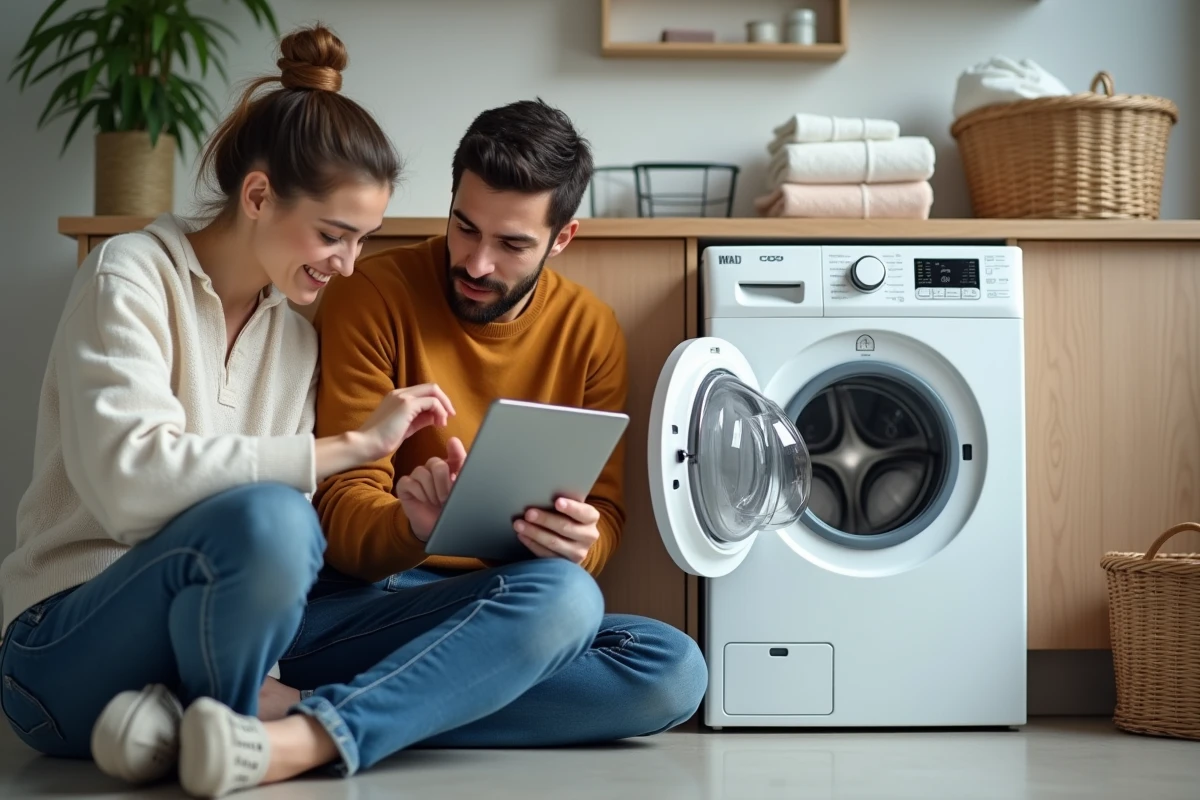
In the face of the multitude of washing machines offered in 2024, it becomes essential to navigate through them. Front-loading models stand out, favored for their large capacity and ease of integration under a countertop. Top-loading models appeal for their compactness, particularly appreciated in urban settings.
The spin speed, most often between 1200 and 1600 revolutions per minute, influences drying speed and how the laundry comes out. A high-performing, quiet device (less than 75 dB) is a real asset for daily use, especially in small homes. Electricity consumption and energy class directly influence the annual bill and ecological impact. Choosing a machine rated A ensures long-term savings.
The longevity of the choice also relies on criteria that are often overlooked: availability of spare parts for at least ten years, responsive after-sales service, and programs suitable for all types of textiles. The most discerning consumers lean towards devices equipped with heat pump technology or an induction motor, which guarantee longevity and discreet operation.
Here are the criteria that should always be checked before purchasing:
- Capacity suitable for household size
- Consumption indicated by the energy label
- Specific programs for delicate textiles
- Availability of spare parts
Comparisons of the best models remind us that everything hinges on the initial choice. Maintenance, the presence of quick cycles, compatibility with eco-friendly detergents: all these details, when added together, extend the life of your appliance and lighten your bills. Investing in a machine designed to last gives you the freedom to wash with peace of mind, season after season.