The fashion of the year is reflected as much in the color palettes of the runway shows as in the economic reports on textile consumption. The 2025 barometer from the French Institute of Fashion indicates a clear increase in buyers stating they prefer fewer pieces, but of better quality. The fashion trends emerging this season reflect this shift: more focused collections, bolder colors, and a relationship to clothing that moves away from impulsive buying.
European textile regulation and its effect on collections
Articles dedicated to fashion trends rarely address the regulatory framework. The EU’s strategy for circular textiles, adopted in 2022, translates from 2024-2025 into eco-design requirements that significantly change the offerings of brands. Seasonal micro-collections are declining in favor of pieces designed to last several seasons.
The upcoming European regulation on the eco-design of sustainable products (ESPR) encourages brands to extend the lifespan of trendy pieces. Materials are selected for their wash resistance, and cuts are designed to remain wearable beyond a single season. This regulatory context explains why the spring-summer 2026 new arrivals favor reimagined basics rather than disposable items.
To track these developments over the weeks, analyses published on Actu Mode help connect brand announcements to the regulatory constraints motivating them.
Spring-summer 2026 trend colors: compared palette
The season’s palettes confirm a shift towards tones that are both soft and saturated. Benetton, which publishes a detailed color guide each year, identifies several color families for spring-summer 2026. The table below compares the dominant registers with those that are receding.
| Color register | Spring-summer 2026 trend | Change compared to previous seasons |
|---|---|---|
| Butter yellow | Key color, worn in total look or as an accent | Strongly increasing |
| Pastel tones (lilac, mint) | Present but less dominant than in 2024 | Slight decline |
| Bright red and orange | Marked return on jackets and accessories | Increasing |
| All black | Still present in the evening, less worn during the day | Stable |
| Beige and ecru | Wardrobe basics, paired with wide trousers | Stable, established as classic |
Butter yellow is establishing itself as the most identifiable color of the season. In contrast, very light pastels are losing ground to bolder shades like red or orange, which provide contrast to sober silhouettes.
Key pieces of spring-summer 2026 style
Three categories of clothing concentrate the most noticeable variations this season. Rather than listing all the pieces seen on the runway, the analysis focuses on those that truly change a silhouette on a daily basis.
Short jackets and reimagined bombers
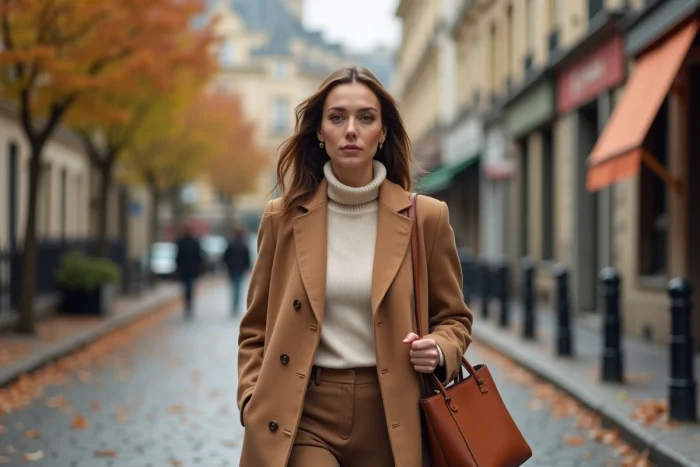
The colored short jacket is the most transversal piece of spring-summer 2026. Short blazers, leather jackets, suede jackets, and cropped trench coats: the cuts stop at the waist or just below. This length rebalances proportions with the wide trousers that dominate the lower body.
The short trench is gradually replacing the classic trench in mid-season wardrobes. Its cut allows it to be worn over both a dress and a barrel jean, the most visible denim cut this season.
Barrel jeans and beige trousers
The barrel jean is distinguished by its rounded cut at the thighs that slightly narrows at the ankle. It replaces straight and slim jeans in the offerings from brands focused on basics. Paired with a structured jacket, it creates a volume contrast that defines the season’s style.
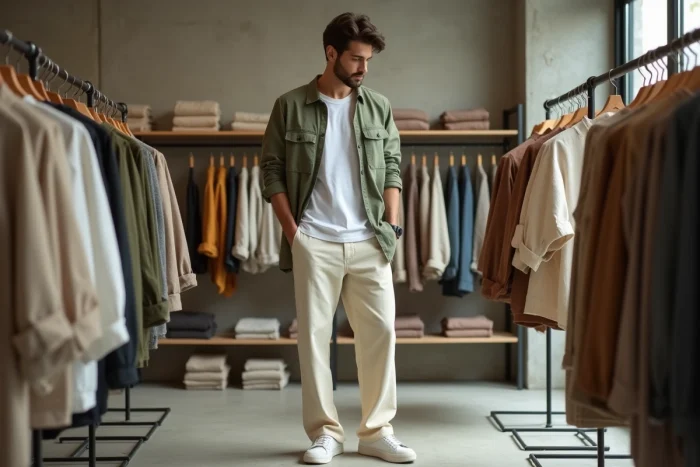
The beige trouser, worn in linen or thick cotton, complements this base. Its neutrality allows it to absorb the bright colors of tops and jackets without overwhelming the silhouette.
Oversized lightweight knit sweater
The oversized sweater does not disappear with the nice weather. Spring-summer versions adopt airy knits, often in cotton or blended linen, which serve as an alternative to the shirt. Worn over fitted trousers, it creates the desired volume contrast this season.
Sustainable fashion and mindful purchasing: consumption data
The report “The State of Fashion 2025” from McKinsey and Business of Fashion confirms that segments related to impulsive buying are stagnating or declining, while categories of good quality basics are progressing. This data directly sheds light on the fashion trends observed on runways and in stores.
- The frequency of purchasing new clothing has been continuously declining since 2022, according to the French Institute of Fashion
- Versatile pieces (short jacket, barrel jeans, beige trousers) are gaining ground because they can be combined with each other over several seasons
- Brands are reducing the number of references per collection to focus on pieces with slower turnover
This movement, sometimes referred to as “fashion sobriety,” does not imply a disinterest in style. It reflects a shift in value: investment is concentrated on pieces that structure a wardrobe rather than on pure novelty purchases.
Saturated colors like butter yellow or bright red also play a role in this logic. A single strong colored piece is enough to refresh several outfits built around neutral basics. The fashion trend of the year is less about accumulation and more about the precision of choices, and consumption data confirms this season after season.