
Lines without particles or sophisticated family trees sometimes hide treasures of vitality. The numbers speak for themselves: a well-thought-out crossbreed, far from being a flaw, can offer our companions stronger health and an extended lifespan. Shelters are seeing an increase in the adoption of mixed-breed dogs, driven by a search for balanced companions capable of adapting to various lifestyles. Breeders are no longer mistaken: they experiment with targeted unions, responding to new needs, far from ancestral dictates.
Mixed-breed dogs: misconceptions, realities, and diversity of characters
The term mixed-breed dog sparks many debates. For some, the lack of pedigree would be a handicap. However, reality imposes a more nuanced view. A thoughtful crossbreed between two breeds can produce dogs with valuable genetic diversity. This mixing often promotes hybrid vigor (heterosis) that limits the transmission of well-known hereditary disorders in purebred lines.
There are plenty of examples. The Labradoodle, a mix of the Labrador Retriever and the Poodle, combines the stability of the former with the intelligence of the latter. The same logic applies to the Cockapoo, half-Cocker Spaniel and half-Poodle. More recently, the Labrador crossed with Malinois is making headlines: a combination of energy, loyalty, and ability to learn, highlighted on the page “Malinois-Labrador Mix: a perfect cross for lovers of active and loyal dogs – Boule de Poil.”
It is impossible to reduce the personality of a mixed-breed dog to predefined boxes. These dogs often display a unique appearance and unpredictable traits: size, coat, temperament, nothing is fixed, even among siblings from the same litter. To anticipate their character, one must closely examine the nature of both parents.
Here are some points to keep in mind to better understand the reality of mixed-breed dogs:
- A mixed-breed dog does not correspond to an officially recognized breed, except after several generations of rigorous selection.
- Health, behavior, and longevity aspects often rival what is observed in purebred dogs.
- Some crosses, like the Kromfohrländer (derived from a Vendéen Griffon and a Fox Terrier), have eventually acquired the status of a full-fledged breed.
Ultimately, rethinking the notion of breed is necessary: each mixed breed carries a unique story, born of chance or choice, blending genetic heritage, specific context, and more or less voluntary selection.
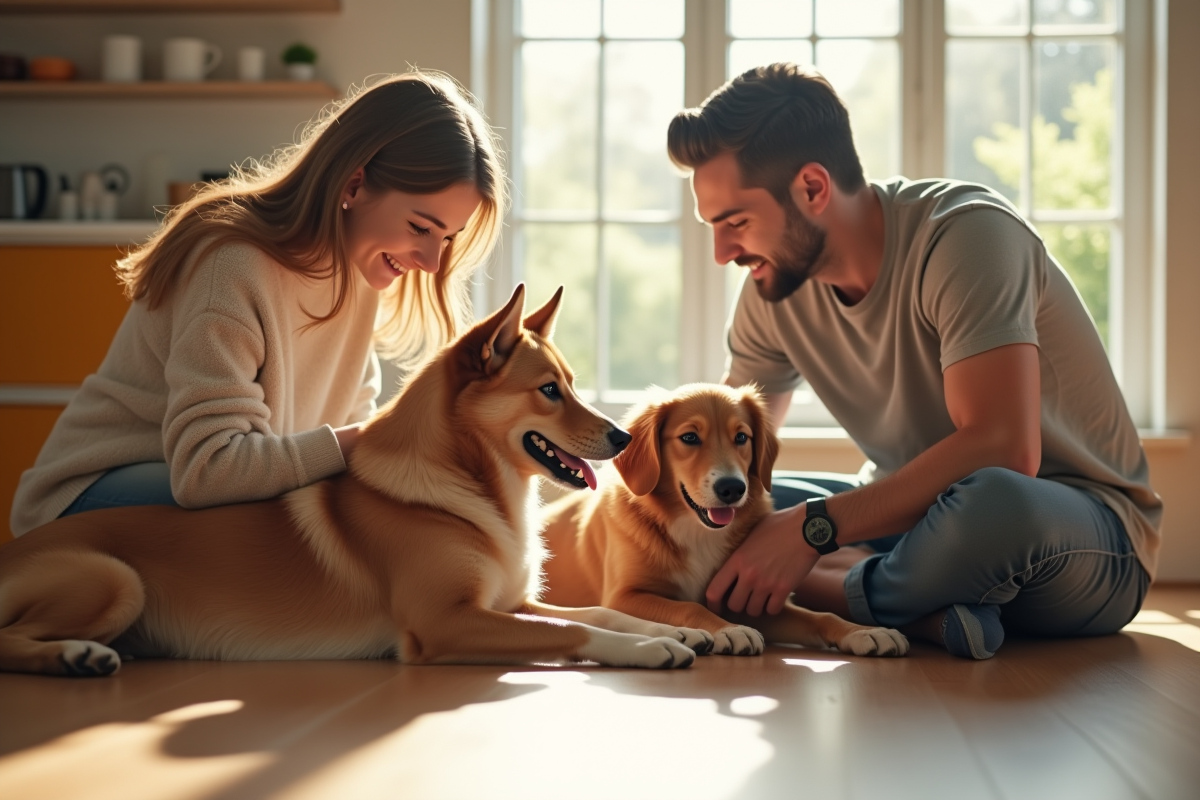
Adopting a mixed-breed dog: health, advantages, and points of caution to know
Choosing a mixed-breed dog means being attentive to its health. Risks do not disappear with crossbreeding: a mix can transmit hereditary diseases from both sides. Dysplasia, dental issues, eye or liver problems, caution remains essential, just like with any companion. DNA tests now allow for identifying origins and spotting certain predispositions, an asset for better anticipating health needs.
Longevity often ranks among the strong points. Several scientific studies show that the lifespan of mixed-breed dogs sometimes reaches or even exceeds that of purebred dogs. This benefit comes from genetic diversity, which protects against specific pathologies in some cases. However, nothing is automatic: environment, diet, physical activity, and the quality of veterinary care remain major levers for maintaining the animal’s health.
Practically speaking, adopting a mixed-breed dog requires a reevaluation of cost and access perceptions. In shelters and at the SPA, these dogs are numerous and sometimes wait longer than a purebred counterpart. Adoption fees are often more accessible, but some crosses from specialized breeders reach high prices, depending on rarity or demand.
Before taking the plunge, it is advisable to assess one’s lifestyle, available space, and the time dedicated to training and care. The needs of a mixed-breed dog depend on its heritage, size, and temperament. Some require regular grooming or exhibit high energy, reflecting one of their parents. The commitment of the future owner remains total: it is about ensuring the welfare and development of the animal, beyond its family tree.
Given the diversity of profiles, each adoption of a mixed-breed dog is almost a tailor-made adventure. Those who take the plunge know: sometimes you adopt a mystery, but it often guarantees living a story unlike any other.