
Cerebral blood flow does not depend solely on overall heart rate. The brain’s vascularization responds to local autoregulation mechanisms, influenced by the partial pressure of CO2, posture, the tone of the cervical muscles, and the quality of ventilation. Therefore, working on cerebral blood circulation requires targeted exercises, not just general cardio.
Isometric Cervical Training and Cerebral Perfusion
The vertebral arteries pass through the transverse processes of the cervical vertebrae before supplying blood to the brainstem and cerebellum. Any chronic tension or weakness in the deep neck muscles can compress these arteries and reduce blood flow to the brain.
Cervical isometric training improves perfusion without mobilizing the vertebrae in rotation, which limits the risk of iatrogenic arterial compression. The protocol documented by Dr. Alekseev relies on a simple device (rolled towel and elastic) to apply static resistance in flexion, extension, and lateral inclination.
We recommend three sets of contractions held for about ten seconds in each direction, without rotational movement. This protocol is particularly suitable for active seniors and individuals working on screens, whose chronic forward cervical posture weakens the deep extensors. You can find additional information on the Aux Portes de la Santé website to adapt these exercises to your situation.
Alternate Breathing and Cerebral Vasoreactivity to CO2
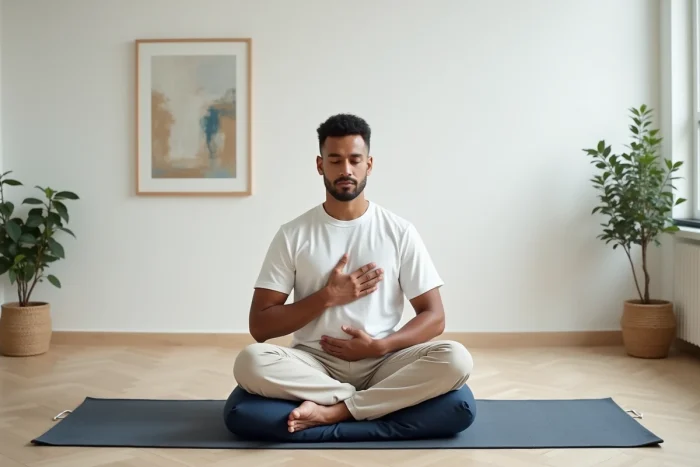
Cerebral vasoreactivity to carbon dioxide is the main non-pharmacological lever for adjusting cerebral blood flow. When the partial pressure of CO2 slightly increases in arterial blood, the cerebral arterioles dilate. Alternate breathing (nadi shodhana) exploits this mechanism by modulating the rhythm and depth of ventilation.
Alternate breathing pranayama is now included in the WHO guidelines of March 2026 on preventive cognitive health. The update of these recommendations acknowledges the effect of nasal alternation on the modulation of the autonomic nervous system and, by extension, on cerebral perfusion.
The basic protocol: inhale through the left nostril (right nostril occluded), hold for a few seconds, exhale through the right nostril, then reverse. Five to eight cycles are sufficient to achieve a measurable effect on heart rate variability, an indirect marker of cerebral vascular regulation.
Precaution on Breath Retention
Prolonged retention causes marked hypercapnia which, in hypertensive subjects or those with vascular malformations, can be counterproductive. We limit the retention phase to four or five seconds in the absence of prior medical assessment.
Inverted Postures and Hydrostatic Pressure Gradient
Placing the head below heart level alters the hydrostatic pressure gradient and temporarily increases cerebral blood flow. Inverted yoga postures (shoulder stand, modified inversions, plow pose) exploit this basic physical principle.
- The shoulder stand (sarvangasana) supported against a wall reduces muscle load and allows for a longer hold, conducive to progressive vascular adaptation.
- The legs-up-the-wall pose (viparita karani) offers an accessible compromise: the torso remains on the ground, only the legs are elevated, which is suitable for individuals suffering from neck pain.
- Modified inversions on the forearms increase the load on the cervical extensors, combining muscle strengthening and hemodynamic stimulation.
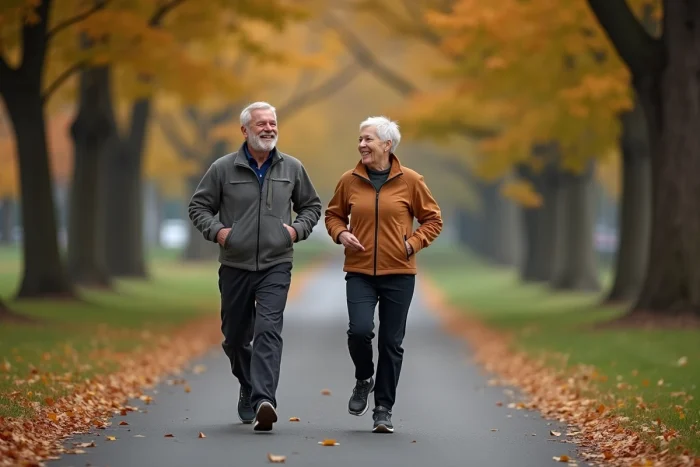
Inverted postures surpass simple walking for transient cerebral perfusion, according to comparisons reported in recent data. Active walking remains superior for overall cardiac output, but inversion specifically targets cerebral vascularization.
Daily Exercises for Cerebral Blood Flow: Combined Protocol
Isolating each exercise limits their effectiveness. We observe better results with a structured sequence that successively engages the three levers: cervical tone, respiratory modulation, and hydrostatic gradient.
Morning Sequence in Three Blocks
- Cervical Block: isometric exercises in flexion, extension, and lateral inclination, three sets per direction, contractions held for about ten seconds. Estimated total duration is five minutes.
- Respiratory Block: alternate breathing, eight complete cycles with short retention. Estimated duration is four minutes.
- Inverted Block: viparita karani (legs up the wall) held for several minutes, followed by a slow return to a seated position to avoid orthostatic hypotension.
The complete sequence takes less than a quarter of an hour. It can be integrated before the first work session, which corresponds to the time when the digital brain fog of remote workers is most pronounced according to feedback from the Peak app.
Adjustments for the Workday
Inserting micro-sessions of alternate breathing (three cycles) every two hours maintains cerebral vasoreactivity without interrupting workflow. Adding a cervical isometric contraction in extension during breaks reduces compression of the vertebral arteries related to the forward head posture on screens.
Daily consistency matters more than the intensity of a single session. Field reports indicate a notable decrease in brain fog symptoms after four weeks of daily practice, which corresponds to the adaptation time of cervical arterial compliance.
Active walking remains a useful complement for overall cardiac output, but it does not act on the same mechanisms as cervical isometric training or alternate breathing. Combining the three approaches provides comprehensive coverage of the physiological levers of cerebral blood circulation, without expensive equipment or prolonged sessions.